Crawl Space Moisture Problems and Encapsulation — What Homeowners Need to Know
LocalFlow Restoration of New England
Why crawl space moisture matters throughout the home
A crawl space is not isolated from the rest of the home. Due to the stack effect — the natural tendency for air to rise through a building from lower to upper zones — air from the crawl space migrates upward into the living space. If that crawl space air is carrying moisture, mold spores, or soil gases (including radon), those contaminants distribute throughout the home.
Crawl space moisture issues are a surprisingly common root cause of problems homeowners attribute to other sources: musty odors throughout the first floor, increased allergy symptoms during humid seasons, higher-than-expected heating and cooling bills (moist air has higher heat capacity and makes HVAC less efficient), and soft or spongy floors above the crawl space (indicating wood deterioration from sustained high moisture).
Signs of crawl space moisture problems
The most reliable way to assess a crawl space is to enter it with a flashlight, moisture meter, and protective gear (at minimum, an N95 mask and gloves). Look for visible standing water or staining that indicates past flooding, condensation or moisture droplets on HVAC ducts, water pipes, or structural wood, visible mold growth (typically black, white, or green fuzzy growth on joists and subflooring), and deteriorated or falling fiberglass batt insulation (a sign it has absorbed and released moisture repeatedly).
From inside the home, soft, springy, or uneven floors above the crawl space may indicate joist deterioration. High indoor humidity during summer months despite normal HVAC operation, and musty odors that are strongest in the morning after overnight air stratification, are reliable indicators of crawl space moisture contribution.
- Standing water or water staining on crawl space floor, walls, or piers
- Condensation on HVAC ducts, pipes, or structural wood surfaces
- Visible mold on joists, subflooring, or insulation
- Fallen, compressed, or deteriorated fiberglass batt insulation
- Soft or uneven floors above the crawl space from above
The three tiers of crawl space moisture management
Not every crawl space moisture problem requires full encapsulation. The appropriate solution depends on the severity and source of the moisture. Understanding the three tiers helps homeowners invest appropriately rather than over- or under-addressing the problem.
Tier 1 — Surface drainage and vapor barrier: For crawl spaces with mild condensation and no standing water, improving surface drainage around the foundation exterior and installing a 6-mil polyethylene vapor barrier on the crawl space floor significantly reduces soil moisture evaporation into the space. This is the minimum intervention and the appropriate starting point for mild cases.
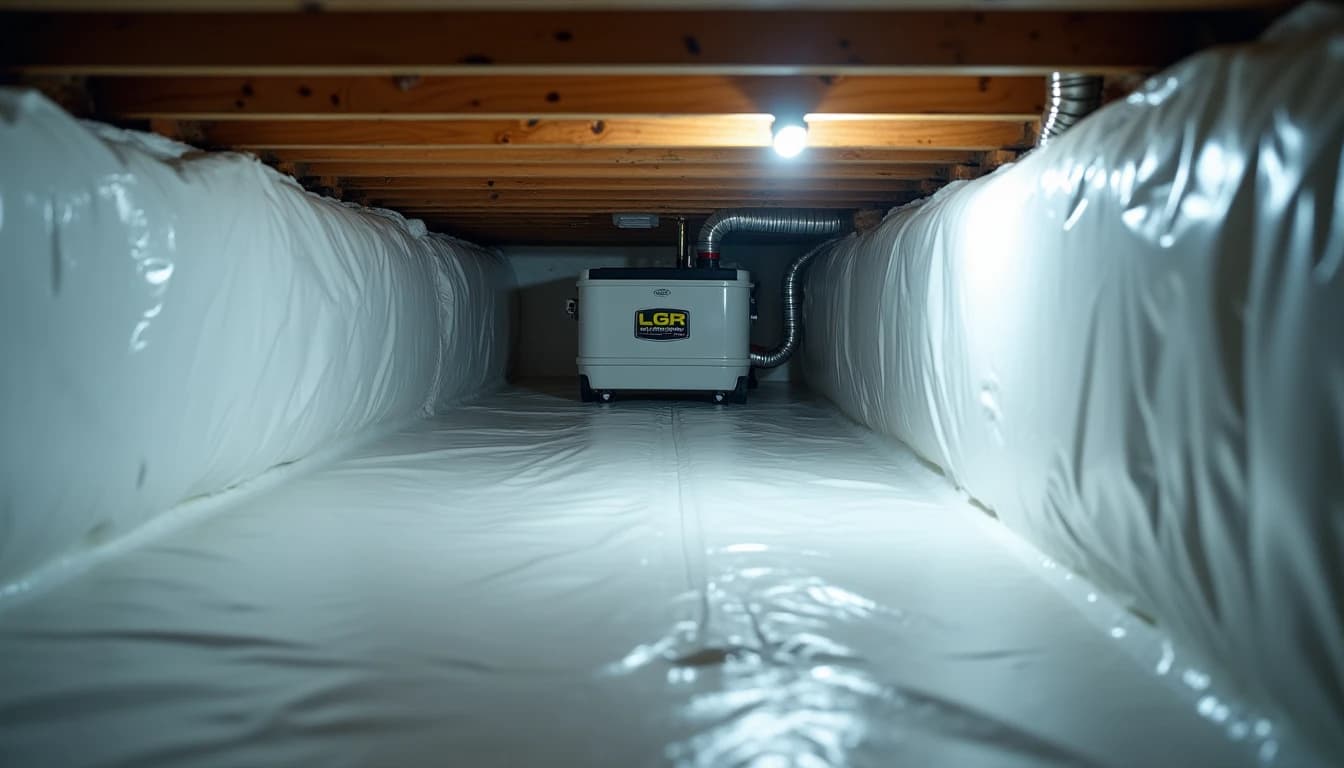
Tier 2 — Full encapsulation: For crawl spaces with significant moisture, periodic standing water, or active mold issues, full encapsulation is the appropriate standard. This involves a heavy-duty (20-mil) liner sealed to the walls and piers, a dehumidifier sized for the space, and potentially drain channels connecting to a sump if groundwater intrusion is a factor.
Tier 3 — Conditioned crawl space: The most robust approach converts the crawl space from a vented, unconditioned space to a sealed, conditioned space connected to the home's HVAC. Building science research consistently demonstrates this is the most effective approach for eliminating moisture, improving energy efficiency, and preventing mold — but it requires closing existing foundation vents and extending conditioned air into the space.
- Tier 1: Surface drainage improvement + 6-mil polyethylene vapor barrier
- Tier 2: 20-mil encapsulation liner + dedicated dehumidifier + drainage as needed
- Tier 3: Sealed conditioned crawl space connected to HVAC — most effective long-term
- All tiers should include exterior grading correction and downspout management
What encapsulation involves
A professional crawl space encapsulation begins with removing any existing failed insulation, treating existing mold on structural wood with EPA-registered antimicrobials (or removing and replacing significantly deteriorated wood), and preparing the crawl space surfaces. The liner — typically a reinforced white polyethylene between 12 and 20 mils thick — is then installed on the floor and lapped up the walls and piers, sealed at all seams with appropriate tape, and secured to the foundation wall at the top.
A properly sized dehumidifier (not a consumer unit — a commercial-grade crawl space dehumidifier capable of operating at high moisture loads) is installed and connected to a drain or condensate pump. The dehumidifier maintains relative humidity in the crawl space at 50-55% year-round, preventing both condensation and mold growth.
Frequently asked questions
How much does crawl space encapsulation cost?
Professional encapsulation of a typical residential crawl space runs $3,000 to $8,000 depending on square footage, accessibility, liner thickness, whether a dehumidifier is included, and whether mold treatment or insulation removal is needed. The investment typically pays back through improved energy efficiency, prevention of structural deterioration, and avoided remediation costs.
Can I do crawl space encapsulation myself?
The vapor barrier component (Tier 1) is DIY-accessible for homeowners comfortable working in tight spaces. Full encapsulation with proper wall sealing, pier wrapping, and commercial dehumidifier installation is more complex and the results depend heavily on proper seam sealing and dehumidifier sizing. Most homeowners who attempt DIY encapsulation either under-spec the liner or miss critical seam sealing — both result in ongoing moisture problems.
Do crawl space vents need to be closed during encapsulation?
For full encapsulation, yes — foundation vents are closed and sealed. This is counterintuitive (vents seem like they should help with moisture), but building science research demonstrates that ventilating crawl spaces in humid climates actually introduces warm, humid outdoor air that condenses on the cooler crawl space surfaces, worsening moisture problems. Sealed encapsulated crawl spaces consistently outperform vented crawl spaces in moisture control.