Water Damage Categories 1, 2, and 3 Explained — Why Category Matters for Cleanup
LocalFlow Restoration of New England
Why water source classification drives the entire remediation plan
When a restoration professional arrives at a water damage event, one of the first questions they answer is: what is the contamination level of this water? The IICRC S500 Standard — the industry's governing document for water damage remediation — classifies water into three categories based on health risk, and that classification determines PPE requirements, whether materials can be dried in place or must be removed, what disinfectants are required, and how disposal is handled.
Homeowners and property managers who understand the three categories can make faster, better-informed decisions and avoid being surprised by the scope or cost of a remediation. Here is a plain-language breakdown of each category.
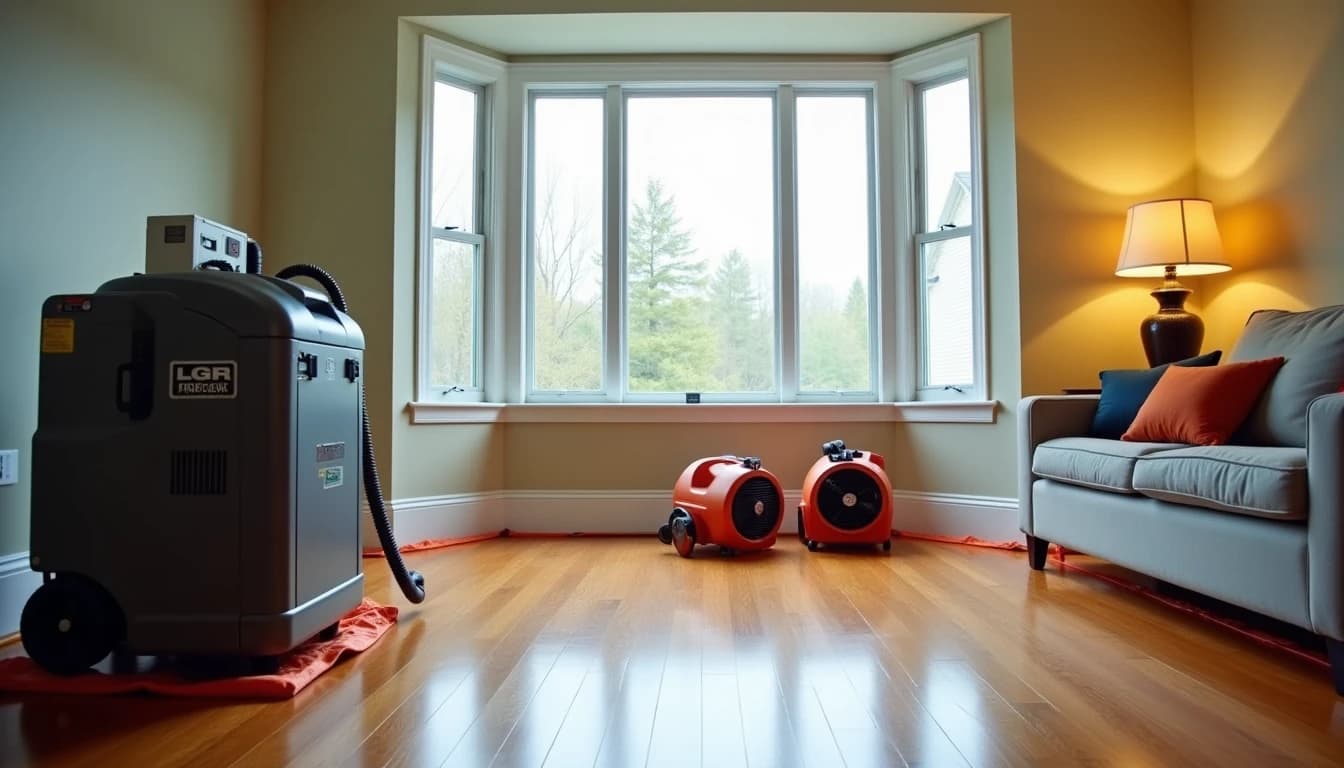
Photographing source points, wet-line elevations, and equipment placement early creates a defensible chronology when carriers ask how category assumptions were made hour by hour.
Category 1 — Clean water
Category 1 water originates from a sanitary source and presents no substantial risk from dermal, ingestion, or inhalation exposure. Sources include broken supply lines, overflowing sinks or bathtubs (without contamination), and appliance malfunctions where only municipal water is involved. Rainwater intrusion through a roof leak is typically treated as Category 1 at initial contact.
Category 1 water can often be dried in place if extraction is prompt. Porous materials like drywall and carpet padding may still require removal if saturation is extensive, but the driving factor is structural drying rather than contamination control. Response time is still critical — Category 1 water that sits for 48 hours in warm conditions can degrade to Category 2 as bacteria begin to grow.
Cost implications of Category 1 are generally the lowest of the three categories. A competent restoration company will still use moisture meters and thermal imaging to map saturation fully before making material-removal decisions — do not accept a contractor who treats Category 1 as automatically trivial.
- Sources: supply line breaks, sink overflows, dishwasher leaks (clean cycle), roof rain intrusion
- Can often be dried in place with prompt extraction and drying equipment
- Degrades to Category 2 if untreated for 48+ hours at room temperature
- Least costly category when treated quickly
Category 2 — Gray water
Category 2 water contains significant contamination and has the potential to cause discomfort or illness upon exposure. Sources include washing machine discharge, dishwasher overflow, aquarium leaks, and toilet overflows with urine only (no feces). Groundwater intrusion through foundation walls often qualifies as Category 2 due to soil contaminants.
Category 2 remediation requires PPE (gloves, eye protection, and N95 respirators at minimum), antimicrobial treatment of all affected surfaces, and removal of porous materials that cannot be adequately dried and disinfected. Carpet and pad from Category 2 events are nearly always removed — the contamination embeds in fibers and cannot be reliably eliminated through cleaning alone.
Category 2 remediation costs more than Category 1 due to additional labor, antimicrobial products, and greater material disposal. If your property experiences Category 2 water damage, expect the restoration company to establish containment and apply EPA-registered disinfectants throughout.
- Sources: washing machine overflow, dishwasher flood, toilet overflow (urine only), groundwater
- Requires PPE, containment, and antimicrobial treatment throughout
- Carpet and porous materials typically removed rather than dried in place
- Degrades to Category 3 if untreated for 24–72 hours
Category 3 — Black water
Category 3 water is grossly contaminated and contains pathogenic agents that pose serious health risks. Sources include sewage backups, floodwater from rivers or storm systems (which carry agricultural runoff, fuel, chemical contamination, and biohazardous material), and any Category 1 or 2 water that has gone untreated long enough for mold and bacterial colonization to establish.
Category 3 remediation is the most intensive and expensive category. It requires full Tyvek suits, N95 or P100 respirators, and eye protection at all times in the affected space. All porous materials in contact with Category 3 water — drywall, insulation, wood framing in many cases, carpet, pad, subfloor — must be removed and disposed of as contaminated waste. Structural components that can be saved require multiple rounds of antimicrobial treatment and post-remediation testing.
If you have experienced a sewage backup or flood event, assume Category 3 until a certified professional determines otherwise. Do not attempt DIY remediation — the health risks are real and documented, and insurance adjusters will flag improper remediation attempts.
- Sources: sewage backups, river/storm floodwater, standing Category 2 water left 24–72 hours
- Full PPE (Tyvek, P100 respirator, eye protection) required throughout
- All porous materials removed and disposed as contaminated waste
- Post-remediation clearance testing recommended before reconstruction
Frequently asked questions
My basement flooded from rain — what category is it?
Rainwater itself is Category 1, but groundwater that has passed through soil and the foundation typically qualifies as Category 2 due to soil-borne contaminants. If any sewage system backed up during the event, it is Category 3. Have a professional assess before treating it as clean water.
Can Category 2 or 3 water damage be cleaned up by the homeowner?
Category 2 small-scale events (a few square feet) can be managed by homeowners with proper PPE and EPA-registered disinfectants, but larger events and all Category 3 events should be handled by certified restoration professionals. Health risks are significant, and improper remediation can void insurance claims.
Does insurance cover all three categories?
Standard homeowner's policies typically cover sudden and accidental water damage across all categories, but coverage depends on the source. Sewer backup coverage is often a separate endorsement. Flood damage from rising exterior water requires separate flood insurance. Review your policy declarations page for specific exclusions.